
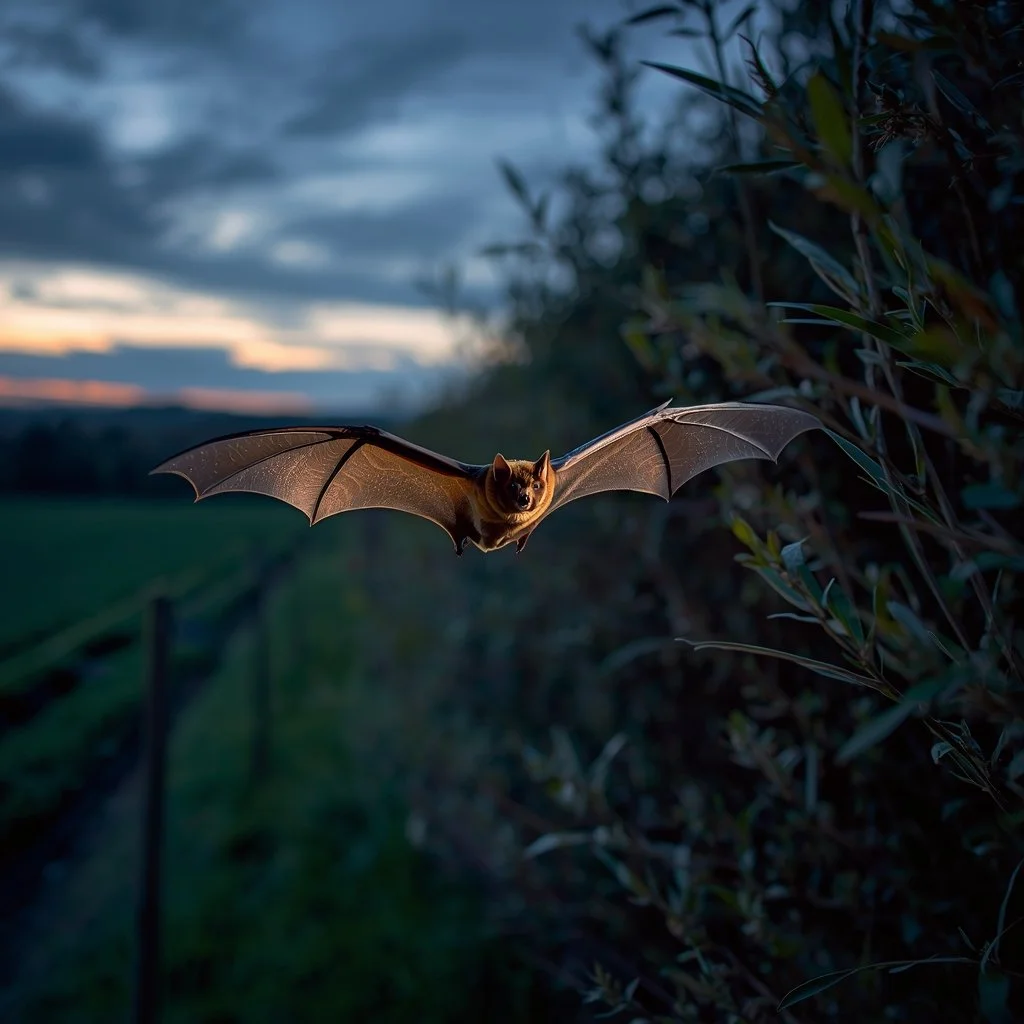
Bats are among the most important indicators of a healthy landscape. Because they feed on flying insects and rely on connected habitats such as hedgerows and woodland edges, bat populations can reveal a great deal about the ecological condition of a site.
At The Ferals, bat activity surveys were carried out during September and October using static bat detectors positioned across the farm. These devices record ultrasonic calls produced by bats as they fly and feed, allowing ecologists to identify the species present and measure activity levels.
A diverse bat community
The surveys revealed a diverse assemblage of bats using the landscape. In total, nine bat species or species groups were recorded during the monitoring period. The most frequently recorded species was the soprano pipistrelle, a small bat commonly associated with farmland hedgerows and wetland habitats. However, several less common species were also detected.
One of the most notable discoveries was the presence of barbastelle bats. This species is considered rare in Britain and is strongly associated with well-connected, insect-rich landscapes. At The Ferals, barbastelle calls represented approximately sixteen percent of all bat recordings — a significant proportion for a species with specialised habitat requirements.
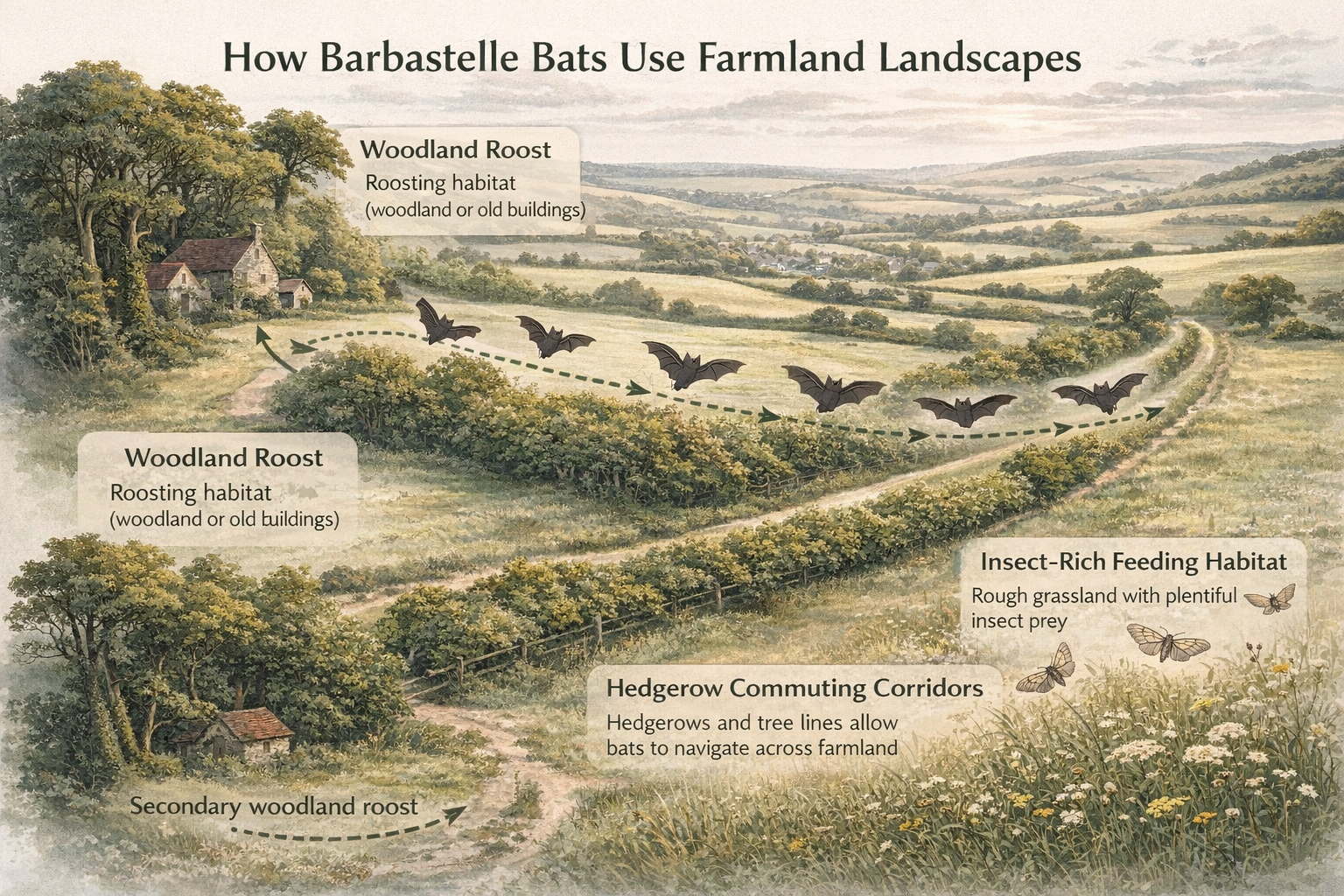
Illustration of how bats move through connected landscapes using hedgerows as commuting routes between roosting and feeding areas.
The survey also recorded greater horseshoe bats — another species of high conservation interest. A nationally important maternity colony of greater horseshoe bats is known to exist nearby at Bryanston School in Blandford, and the surrounding countryside provides important feeding territory for this population.
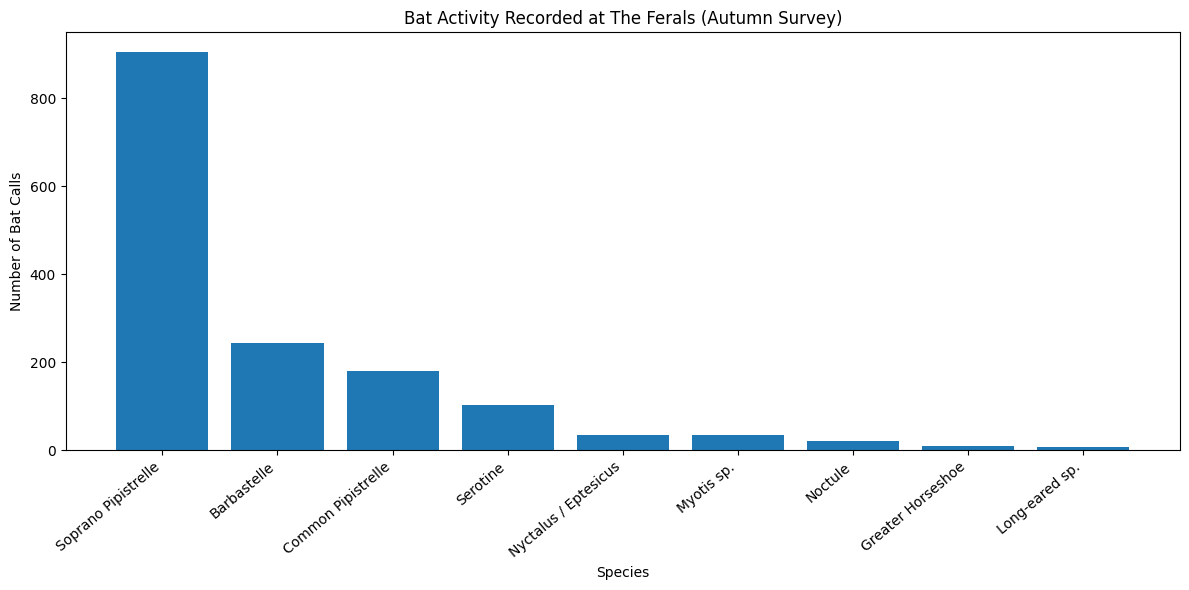
Bat activity recorded during ecological surveys at The Ferals showing the relative frequency of bat species detected across the site.
Soprano pipistrelles accounted for the majority of recordings, followed by barbastelle and common pipistrelle bats. Other species detected included serotine, noctule, long-eared bats, and Myotis species — all of which use farmland landscapes for feeding and commuting.
What the bat records mean
Together, these records suggest that The Ferals forms part of a wider ecological network supporting bat movement through the Tarrant Valley. Hedgerows, woodland edges, and open grassland provide important feeding routes and insect-rich foraging areas.
As habitat restoration continues across the farm, these features are expected to become even more valuable for bat populations in the area. The presence of this diverse bat community provides a strong ecological baseline for the ongoing habitat creation work being delivered through the BNG habitat bank at The Ferals.